MIFF 2026: Minotaur
Melbourne International Film Festival 2026 is ongoing and I went to watch my third session (of 13!)
This post my short review of ‘Minotaur’. Part of this review includes spoilers, it’s clearly marked below.
For context: I am a photographer/youtuber that wants to up my cinematography and storytelling, that’s why I’m watching 13 sessions at the film festival PLUS reviewing them here on my blog!
I chose to watch this movie from the synopsis. It looks like the kind of drama/thriller that I like. To describe my taste, I quite enjoy 'Black Mirror' although I’d be okay if some episodes are less gory. I don’t like thrillers that use jump scares to be entertaining. I like it when the setting of the movie is the main source of thrill and tension, ‘Severance’ for example. For 'Minotaur', it’s the country being in war sets an underlying high-tension setting. At least that’s what I was hoping, so how was the actual movie?
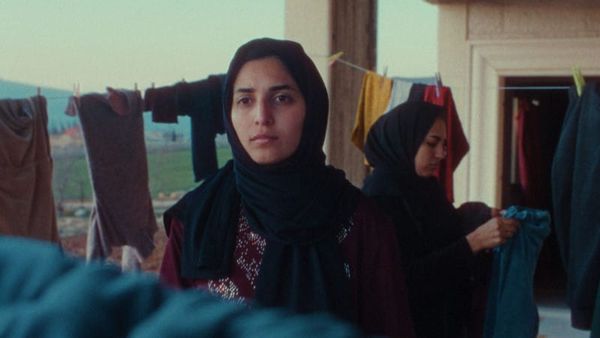
All images courtesy of miff.com.au
Who would I recommend this to?
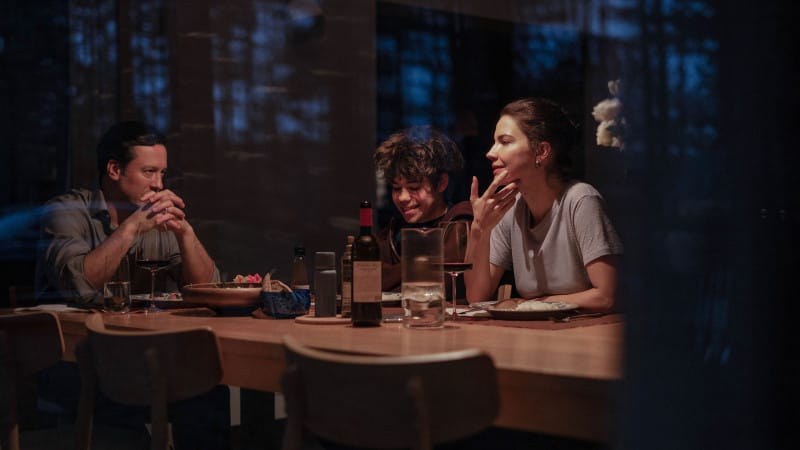
I can confirm that it does have the heavy underlying tones like in 'Severance' and other similar movies. So I'd recommend it to people who find that enjoyable. Also anyone who enjoys beautiful cinematography which ties to the storytelling. This surprised me because I didn't expect it, I really liked the way this movie was shot. It reminds me of the series 'Adolescence' - more below in the cinematography section.
Structure
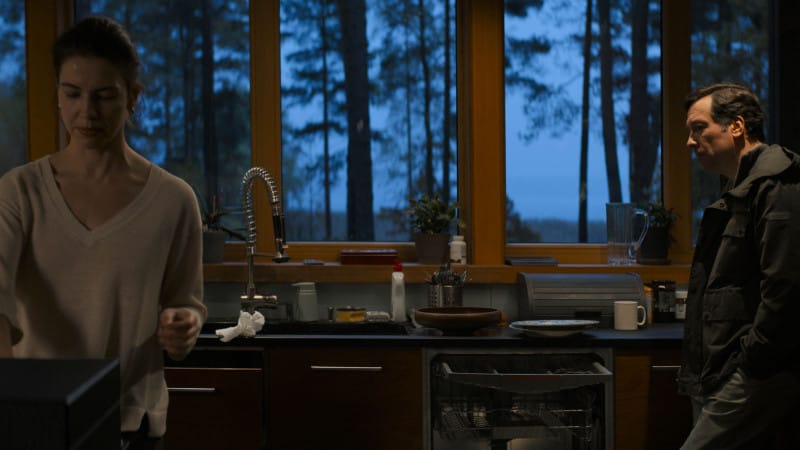
The movie's pace is really slow, for best and for worst. It takes its time to introduce the characters. There's a lot of subtext. I think it's more enjoyable if you know the synopsis beforehand. If you go in blind, it might be a bit too much 'catching up to the story' at the start - although maybe that's just me.
The storytelling style doesn't pose clear indications when the story has moved forward. It feels like it moves like a feather falling down, just gently nudges the story forward. It has a lot to do with the cinematography which I'll take about later. In short, the camera movement dictated the pace of the movie.
The sound design is awesome. There's hardly any music in it, in fact none in almost the whole show except a couple 5ish minutes section (I believe) and even then it didn't seem out of place. The sound design bit that stood out to me was the way elements at the edge of the screen were sounding, especially at a start of the scene. They really sell the ambiance with it, making the movie extra immersive.
Narrative
The context of "it's Russia during the war" is an important one to know when going in. I suppose the movie does explicitly call that out too, but I feel like it's a bit late in the story when that happens - but maybe I'm wrong, not quite sure on my opinion here. The way they use that context is clever, subtle but foundational. I wonder if the narrative was imagined from the context or the story outline was made and then they try to find the context where it fits. Regardless, it matches well!
The overall story is a cool one. The way power imbalances manifesting in a very real way for a country that is in war. It's about privilege and exploitation, though hidden behind the story of love and betrayal. It's a cool combo that I haven't seen before. And, once again, the cinematography tied it altogether.
Past this point, the review contains heavy spoilers.
Cinematography
The camera movement really sets the pace of the movie. The shots are often a still shot where the characters move around the scene. There were instances that the camera followed a certain character, but I think they were the odd spots that were mixed in, maybe 20% of the shots in the movie. The rest has the camera staying still at one place or with slow pans around the scene.
The camera pans matches the intensity of the scenes to some degree. I said to some degree because it still panned slowly when the pivotal climax scene happened. The audience is left in disbelief of what happened. The character in the movie is panicking but still level headed. The camera pans supports this notion that the character is calm because he knows he can go away with it. The fact that the pace stayed slow even after that showed that in Gleb’s world, the crime is of little consequence.
Oh, by the way, the fact that that climax section had no dialogue for 10+ minutes was bonkers. So cool. I feel like the whole cinema was holding their breath. The tension was high!
One of the most interesting ways of using cinematography for the storytelling. It has the vibe of the show ‘Adolescence’ which had every episode done in one single camera take. It’s not the exact same approach, but the results feel similar to me. The camera movement is more than just a means to get the story on camera, the movement (or stillness) is part of the storytelling.
Outro
'Minotaur' is a hauntingly beautiful movie about love, betrayal, privilege, and exploitation. The pace is tightly coupled with the cinematography, especially the way the camera moves (or doesn't move).