MIFF 2026: Parallel Tales
Melbourne International Film Festival 2026 is ongoing and I went to watch my fifth session (of 13!)
This post my short review of ‘Parallel Tales’
For context: I am a photographer/youtuber that wants to up my cinematography and storytelling, that’s why I’m watching 13 sessions at the film festival PLUS reviewing them here on my blog!
Why did I choose to watch this movie?
The genre, psychological drama, is one of my favourites. I really like a thrilling storyline with a lot of suspense that doesn’t involve horror elements. It’s why I like Severance, Presumed Innocent, Black Mirror (well some episodes), and mangas/animes like Death Note or Psycho Pass. I find them interesting because of it's about the human mind. The way the mind breaks down or built up, the way logical and rational thinking is challenged by the irrational feelings - or vice versa. It's all fascinating to me. From the synopsis, this one fits the genre. So I went for it!
All images courtesy of miff.com.au
Who would I recommend this to?
Aside from lovers of psychological drama that I mentioned above, lovers of movies with layered stories would like this too. Bits of ‘Inception' or even the more light hearted 'Love Actually.' The title is pretty verbose, kindly describing that there will two tales going at once. But the way it's told is not verbose at all, the intermingling between "fiction" and "reality" (in the movie‘s universe) is done in a satisfying way. More discussion on this below!
Spoilers ahead.
Structure
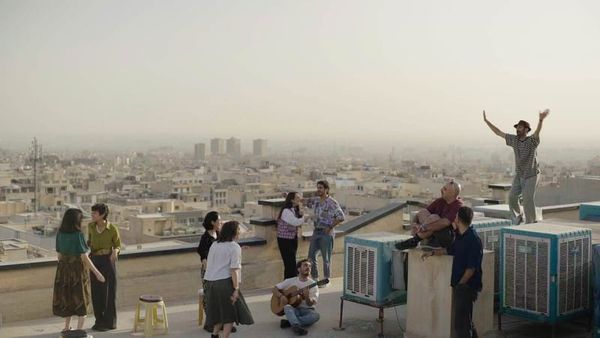
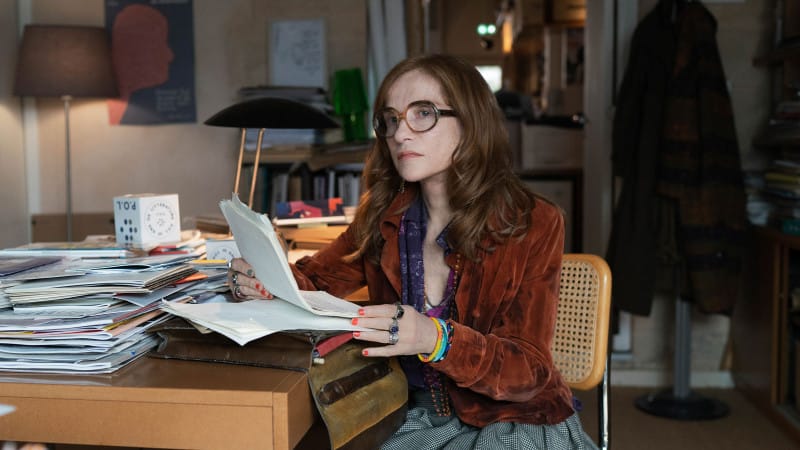
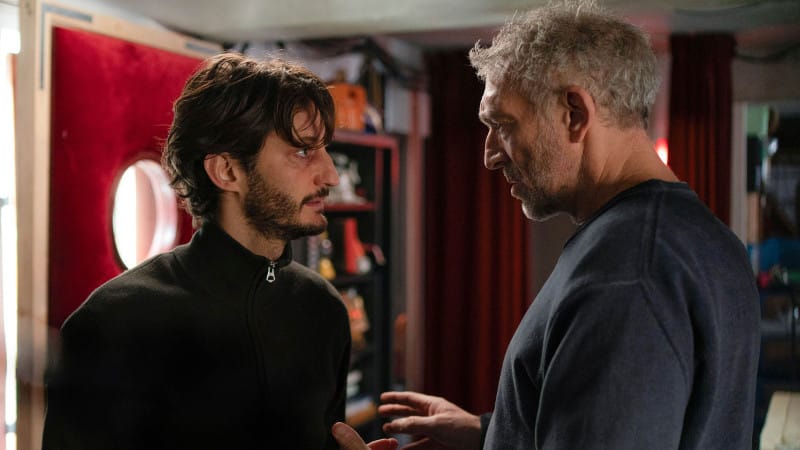
As mentioned, the weaving in and out of "fiction" and "reality" was done really well. The story follows a novel writer spying on her neighbour across the street and imagining a story between the people that she sees. The story that she writes is a mix between reality and fiction - making it mostly fiction. The reality part is basically the fact that these people physically exist but everything from their name, relationships, their personality, are all made up by the writer. As the audience of the movie, there is little delineation between the fictional writing playing out versus the "reality" being shown (as in what the fictional movie deems as reality.) This reminds me of a book that I recently read, 'Taiwan Travelogue', where the book is pretending to translate a Japanese fictional book into Mandarin, the Mandarin fictional translation is in fact the original book. Layers.
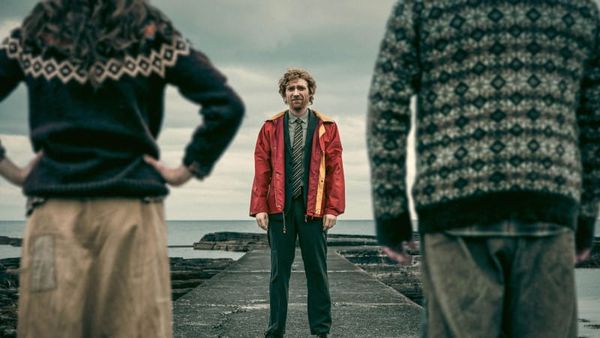
Speaking of layers, there's another layer on top of that. The storyline of each character that at first seemingly does not connect but then gradually became interconnected. This reminds of the movie ‘Love Actually’, though the connection between the storylines happen much earlier in the movie. As the audience, you start to piece the relation between each character pretty early - but remember that there's also the intermingling of fiction and reality in between.
All that said, I feel like it's not as complex as I'm explaining it to be. It's not too difficult to follow, like ‘Tenet’ for example - I still need to watch that movie again to understand it. If you're reading this after watching, I think you'd agree!
Narrative
With that structure in mind, the overall narrative becomes a game of catch-up. The writer's story becomes a sort of prediction that you see first and then you would wonder if that matches with what actually happens with them. Moreover, you wonder what would happens if/when the characters-from-the-writer side interact with the written-subjects side. The narrative uses that natural intrigue very well, or rather, that intrigue is built into the narrative.
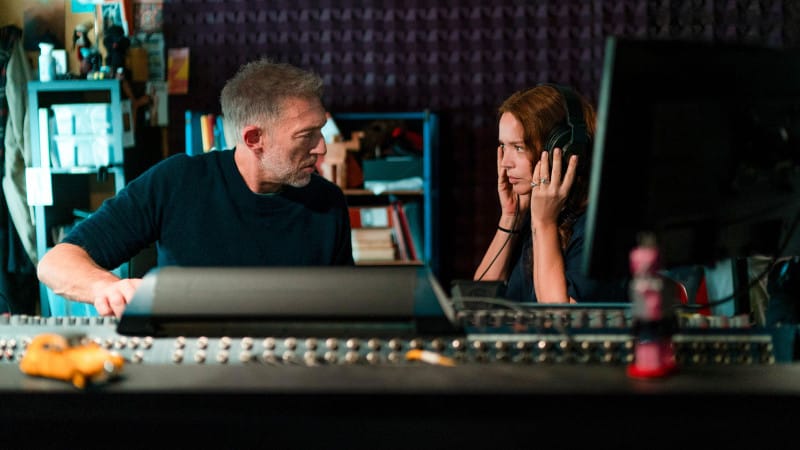
As an aside, it's cool to see the way sound is added other movies! This is shown through the job of a set of characters, their job is to add sound to movies. I think it's called sound design?
The humour in it is clever as well. By clever, I mean the kind of jokes where the audience would feel "ha! That's funny, very clever." This is done in the shape of callbacks, things that happened in the story happening in a similar way in "reality". Of course there is more straightforward humorous dialogue too.
The style of humour makes the story feel more light hearted to me. The genre psychological drama certainly fits the story, but I also think it's on the lighter side. There are suspenseful moments, but they don't feel high consequence, which lowers the intensity of the suspense. So, yes, there are tricks and twists of the mind and there's "drama" between character - however the risk-reward of character actions seem mild.
The twist and turns are made ambiguous because it was established early on that some parts of the film is from the fictional writing, but not all of it was. So when something odd happens - together with the visual of someone writing - you would wonder, "wait is that real or is that the fictional writing."
The conclusion of the movie didn't feel like the conclusion of the story. It's left open ended abruptly. Perhaps a show of irony that "reality" does not usually have a neat ending like in fictional stories.
Cinematography
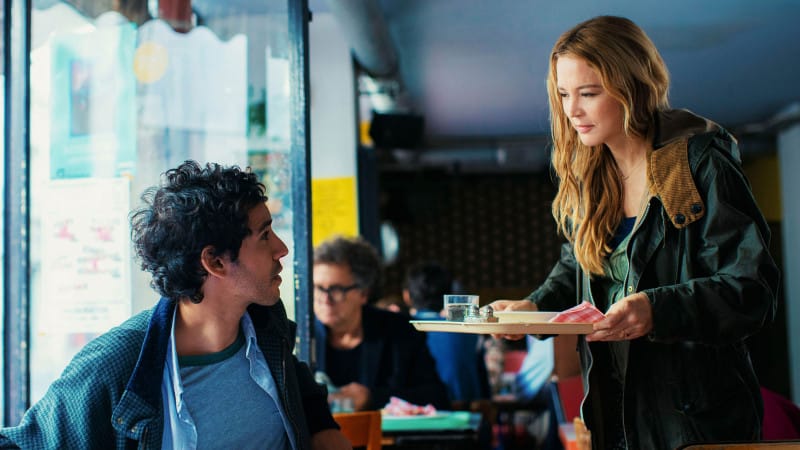
The transitions between the story and the real life was very seamless, lots of cool visual transitions. In particular the first part of the movie when the writer was reading her story out loud and the scene unfolds in front of us. Then the movie moved back and forth between the writer's "reality" and the story that she's telling.
However, honestly, the narrative and structure were so compelling that it’s hard to pay attention to the cinematography. Actually, perhaps it's intentional that the scenes are not shot in a complicated or stand out way because the main vehicle for the narrative is the structure. That said, maybe I'm just missing things to point out because I'm a newbie - skill issue 😬
Outro
'Parallel Tales' is a movie with a satisfying weaving between fiction and in-universe reality. The psychological drama narrative is compelling, but not very heavy and kind of light hearted.